Credits
Last updated: September 6, 2026
Cultural Capital images
The Cultural Capital task uses real museum pieces, not stock photography or illustration. Every image below is public domain or CC0, checked against the holding institution’s own per-object rights record rather than a policy page — a collection can be open access in general and still hold objects that are not. Each plate carries its full object credit and a link to the institution’s own listing, so you can verify the piece yourself.
The bank holds 50 objects across 3 registers, tagged per Bourdieu’s Distinction. The tag is used in sampling and in scoring, so it is a measurement decision and not a caption.
| Register | Objects | What it can test | Scoring |
|---|---|---|---|
| Highbrow | 28 | Which consecrated traditions you were taught to recognise | Warmth counted as shown |
| Folk | 11 | Whether you find something in an object nobody framed for you | Warmth counted as shown |
| Contested | 11 | Bourdieu’s diagnostic subjects — beauty in bark, in a sunset | Signed; three plates reversed |
| Pop | 0 | Mass circulation now — which is what copyright is the shadow of | Kept empty on purpose |
Why folk was emptied and refilled
Six objects shipped tagged Folk: a Benin royal palace plaque, an Ottoman sultan’s imperial monogram, an elite Wari tunic, a kente prestige cloth, a signed master calligraphy, a monastic icon. Every one is its own society’s consecrated court or ecclesiastical art, and all six were retagged Highbrow in August 2026.
Calling them Folk had turned the register into a proxy for Europe-versus-everywhere-else, in the language of a taste hierarchy. It also meant the bank had never held folk art of any origin, European included. The eleven vernacular objects that replaced them the next day — things made to be used, worn out and eaten off — are all Cleveland Museum of Art, all CC0, four of them European or Euro-American, six three-dimensional, four made after 1889.
Why contested is signed
Bourdieu found some of his diagnostic subjects rise with education and some fall — the bark of a tree from 15.5 to 60.5 per cent answering “beautiful”, a sunset over the sea from 88.5 down to 65. Averaged unsigned, the two cancel. So eleven objects carry the sign and three are scored in reverse. Four are paintings rather than photographs, because the American documentary archives supplying the rest cannot hold a first communion or a bolero.
One object removed
A north Queensland Aboriginal rainforest shield was CC0 and clean, but shields of that class are initiation-restricted and their designs clan-owned; the community’s own published account records a living norm under which reuse is authorised by the oldest clan member. A CC0 dedication releases a museum’s copyright and cannot grant that permission, and this project has no way to seek it. It is gone.
Where the placements come from
The plates below are only one of the banks this battery draws on. Media Diet places outlets into registers, and the music and film passes use published genre structures — and a reader is scored against those placements, so whose judgement they are is not a detail. Every source the outlet and genre banks rest on is listed here, rendered from the same records the instrument reads rather than transcribed, so this list cannot fall behind the bank.
The named works
Beyond the genres, the music, film, visual and literature passes ask about named works and artists — 2051 musicians, 1316 films and series, 488 visual artists and 1366 authors and poets. None carries a published placement, by construction: audience data for individual artists and titles is commercial and unpublishable, so nothing here is read against a baseline and nothing here is scored.
They exist to catch one thing a genre list cannot — the distance between the genre somebody claims and the work they can actually name. The classifications behind them are this project’s own and unsourced, which is acceptable because a misfiled artist cannot move a number. Where a work is Iranian it carries its name in Persian as well; a recognition task that shows only a transliteration is a transliteration quiz.
Music has a rung between the genres and the names: 140 subgenres on the General track and 54 on the Iran one. Each subgenre entry names the reference works it leans on — genre histories, AllMusic’s style pages, the Persian music sources — and carries a standing of canon, popular or dismissed, so that a listener of what critics deride is measured as a listener rather than as an absence. The names under them are placed by this project.
Film & TV has the same rung: 105 subgenres on the General track and 44 on the Iran one, with the titles under them. 21 of the General subgenres are television forms rather than film genres, because the bank has always held series. On the Iran track the rungs are the categories Persian film discourse actually sorts by — festival cinema, the home network, the Ramadan slot, Sacred Defence — rather than translations of the General ones, and every title carries its Persian name.
Fine Arts has it too: 43 subgenres on the General track and 36 on the Iran one — schools, movements, forms and scenes under each register, the mall-gallery painter and the tattoo shop beside the Old Masters — with the artists under them. Each entry names the reference works it leans on, Gombrich and Grove Art and a museum’s own department names, and on the Iran track Pakbaz’s history of Iranian painting and Seif on the coffeehouse painters. Every Iranian subgenre and artist carries its Persian name.
| Visual artists | Count | Asked as |
|---|---|---|
| Public domain | 200 | Plates — the work is shown |
| In copyright | 288 | Names — reproduces nothing, needs no clearance |
Three of the six Iranian registers hold fewer than five public-domain artists — مکتب سقاخانه (4 of 20), نقاشیخط (3 of 20), مدرن و آوانگارد (1 of 55) — so a plates-only Iranian visual task could show the classical half and almost none of the modern.
Literature has it too: 107 shelves on the General track and 112 on the Iran one, poetry divided as finely as fiction and the airport thriller and the Instagram poet at full strength beside the classics, with 748 authors under the General shelves and 618 under the Iranian ones. Each General shelf names the heading it leans on — a Thema or BISAC code, a prize remit, the Penguin Classics list, a bookseller’s own table — and 61 of the 107 say plainly that the cut is this project’s own, because no trade heading draws the line there. Every Iranian shelf and author carries its Persian name.
Three elements were added on 6 September 2026 without a ladder of their own. Sport is 28 lines on the General track and 24 on the Iran one, Games 19 and 12; both are asked at Surface only, what is followed or played and never who, since athletes, teams and streamers are where a taste question turns into a loyalty question. Podcasts & creators has two rungs: 15 categories on the General track and 12 on the Iran one, with 126 and 70 shows and channels under them — podcast, YouTube or both — and no third rung, because a show is already a name. It carries no political hosts, a rule read on the premise of the show rather than the biography of the host, and the categories, placements and standings are this project’s own. Every Iranian line, category and show carries its Persian name.
Object credit, plate by plate
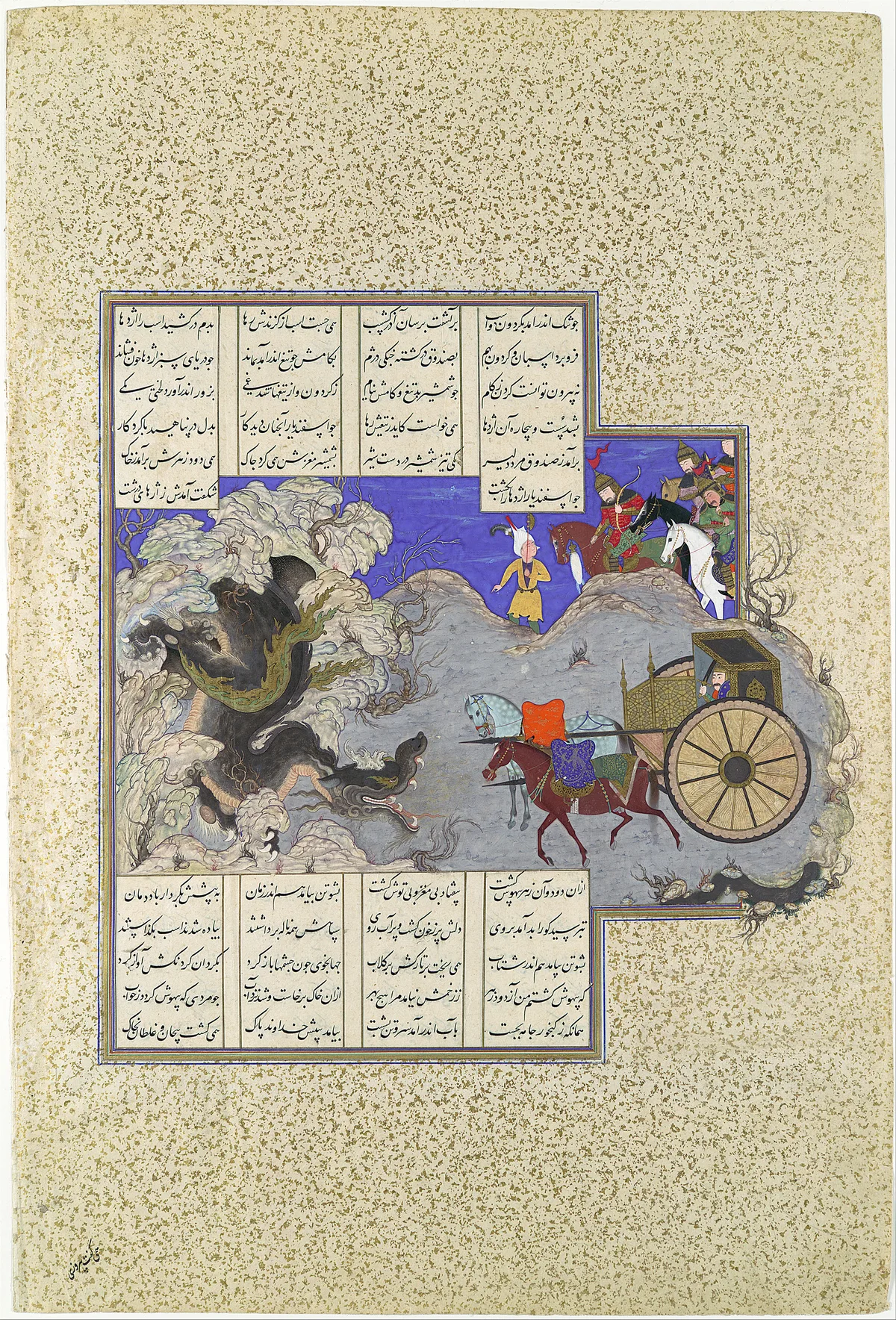
“Isfandiyar’s Third Course: He Slays a Dragon”, Folio 434v from the Shahnama (Book of Kings) of Shah Tahmasp. ca. 1530. Opaque watercolor, ink, silver, and gold on paper. Gift of Arthur A. Houghton Jr., 1970
Public domain / CC0 — Metropolitan Museum of Art Open Access, verified per object — View at the source collection →
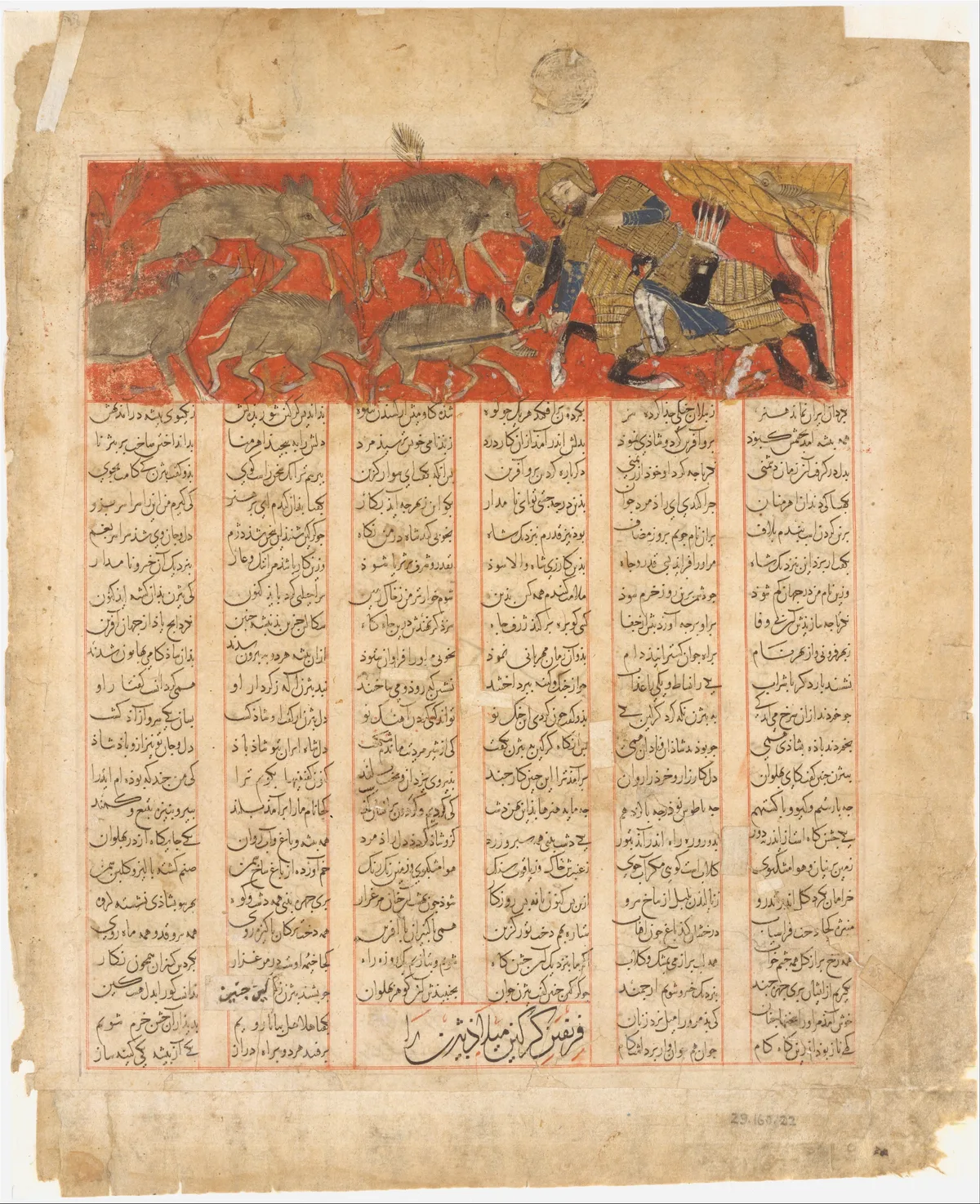
“Bizhan Slaughters the Wild Boars of Irman”, Folio from a Shahnama (Book of Kings). dated 741 AH/1341 CE. Ink, opaque watercolor, and gold on paper. H. O. Havemeyer Collection, Gift of Horace Havemeyer, 1929
Public domain / CC0 — Metropolitan Museum of Art Open Access, verified per object — View at the source collection →
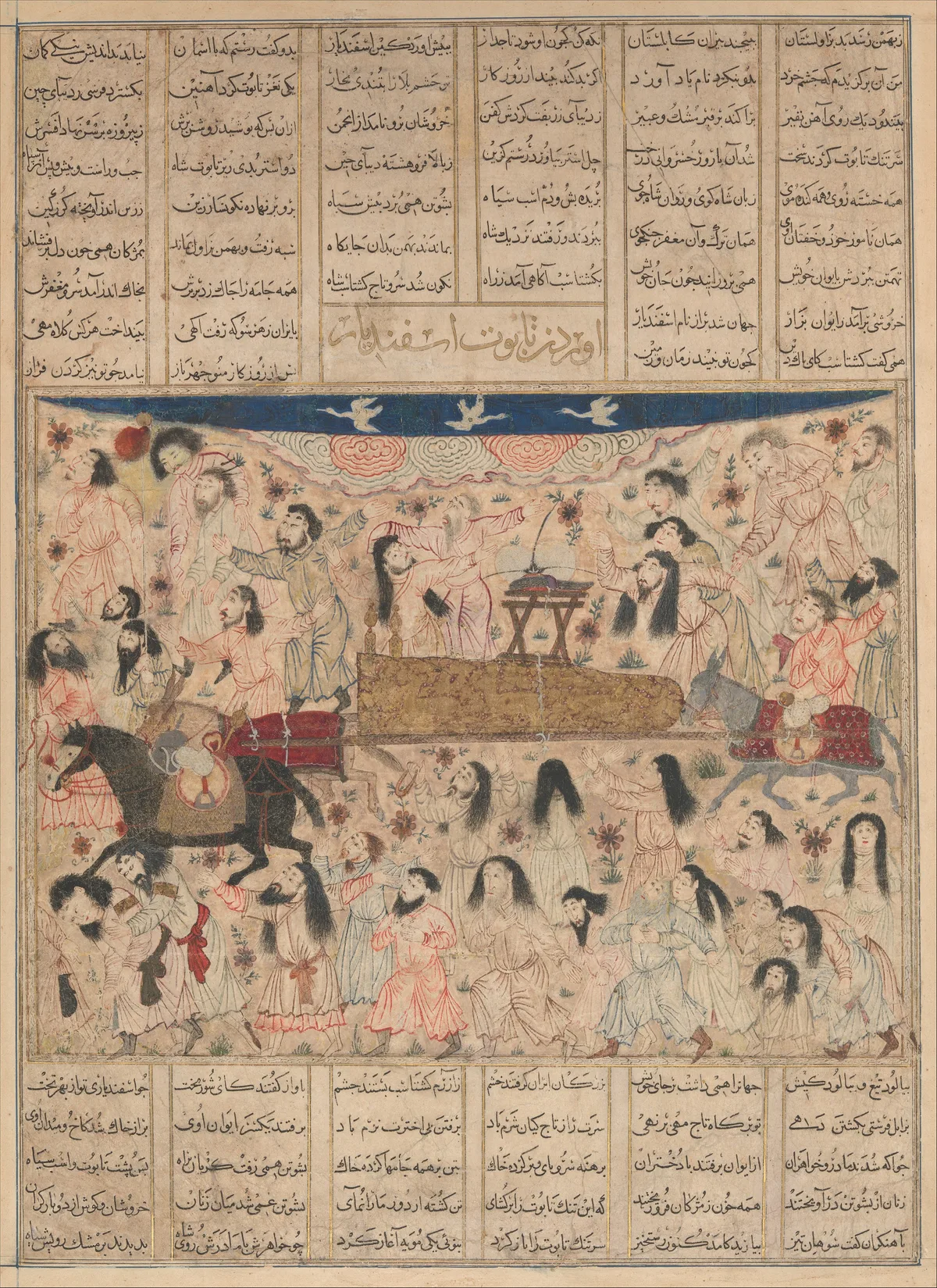
“The Funeral of Isfandiyar,” Folio from a Shahnama (Book of Kings). 1330s. Ink, opaque watercolor, and gold on paper. Purchase, Joseph Pulitzer Bequest, 1933
Public domain / CC0 — Metropolitan Museum of Art Open Access, verified per object — View at the source collection →
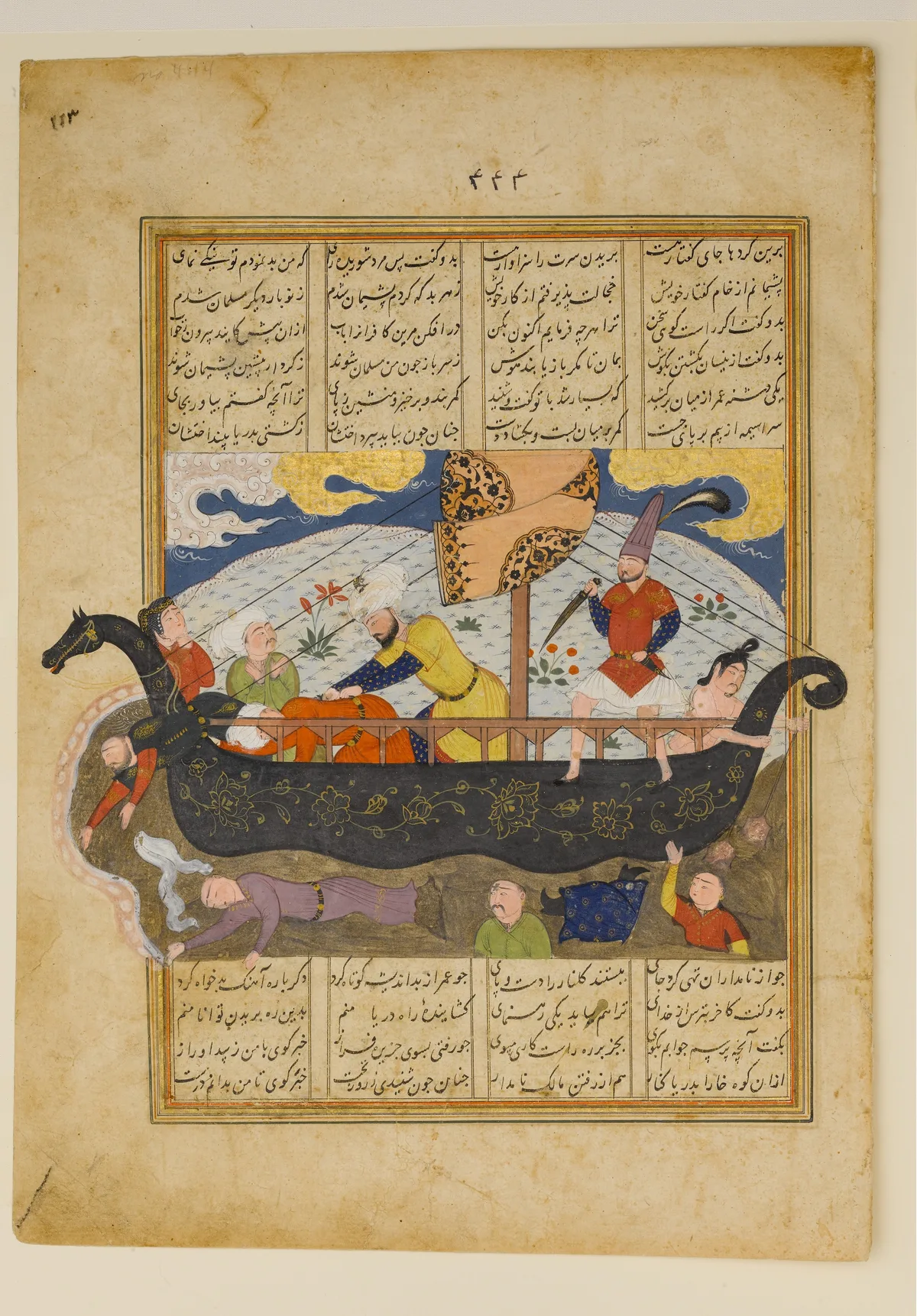
“Amr has the Infidels Thrown into the Sea”, Folio from a Khavarannama (The Book of the East) of ibn Husam al-Din. ca. 1476–86. Ink, opaque watercolor, and gold on paper. Rogers Fund, 1955
Public domain / CC0 — Metropolitan Museum of Art Open Access, verified per object — View at the source collection →
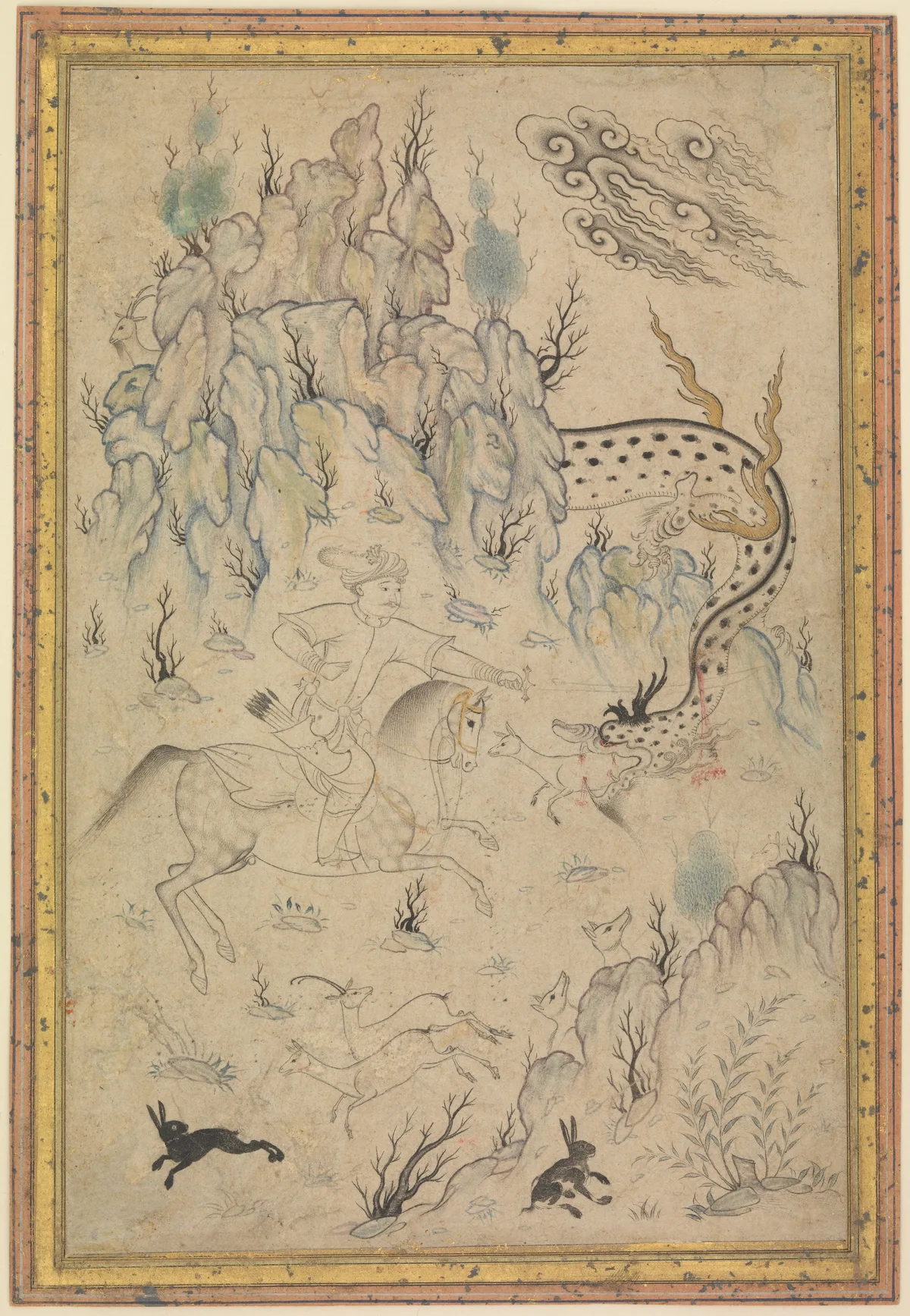
Hero and Dragon. third quarter 16th century. Ink, watercolor, and gold on paper. Gift of George D. Pratt, 1925
Public domain / CC0 — Metropolitan Museum of Art Open Access, verified per object — View at the source collection →
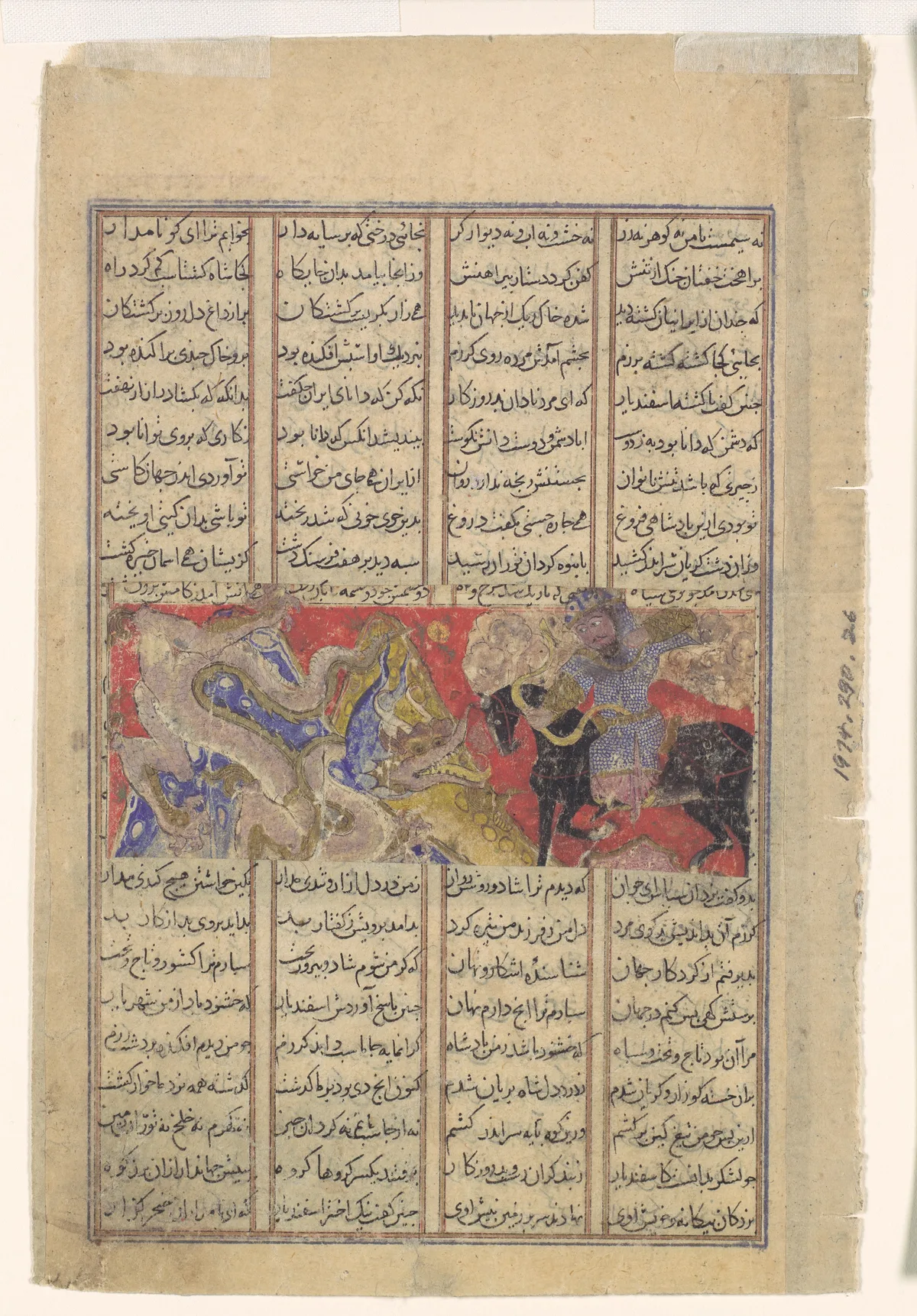
“Isfandiyar’s Third Course: He Slays a Dragon”, Folio from a Shahnama (Book of Kings). ca. 1330–40. Ink, opaque watercolor, gold, and silver on paper. Bequest of Monroe C. Gutman, 1974
Public domain / CC0 — Metropolitan Museum of Art Open Access, verified per object — View at the source collection →
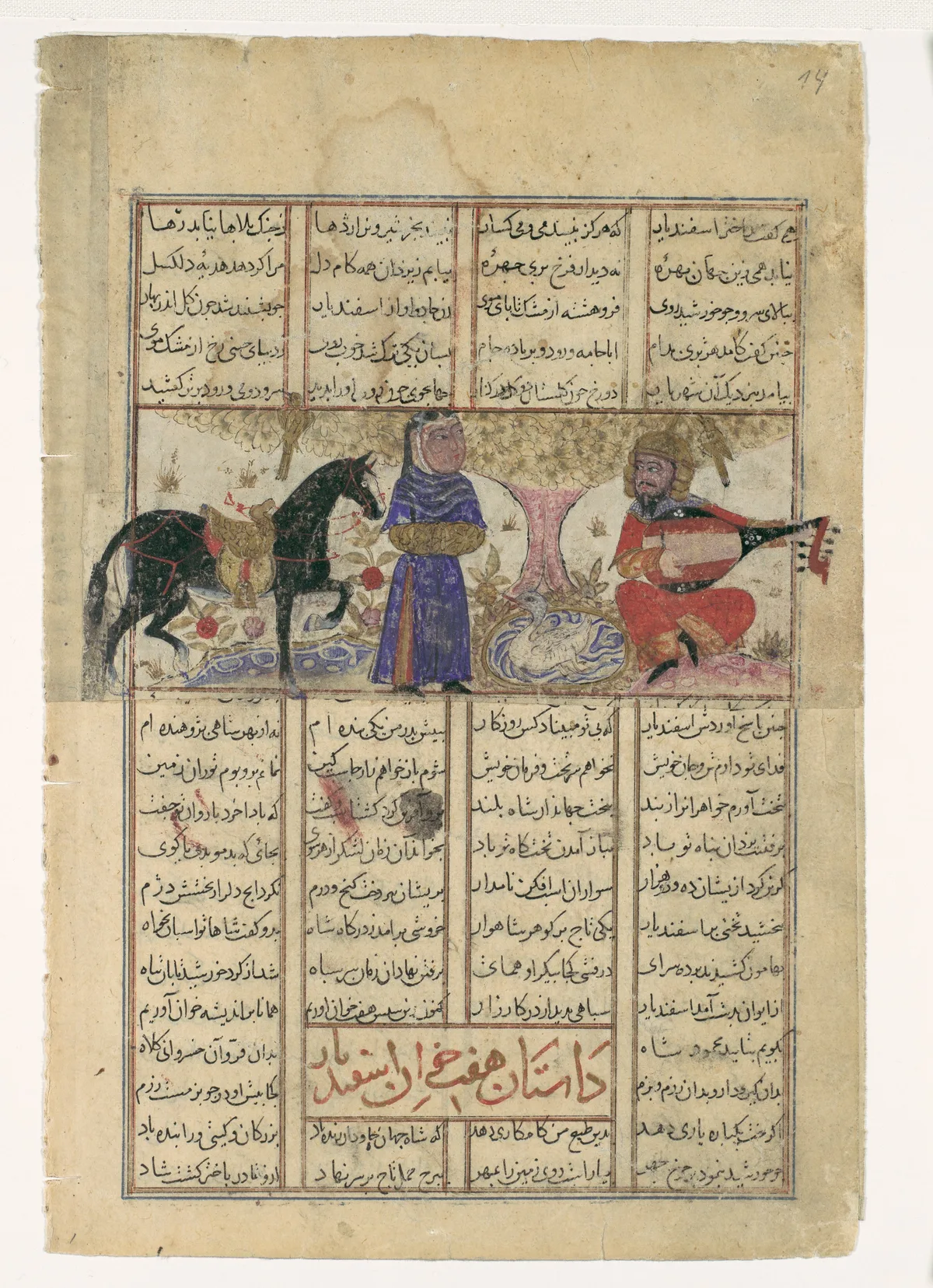
“Isfandiyar’s Fourth Course: He Slays a Sorceress”, Folio from a Shahnama (Book of Kings) of Firdausi. ca. 1330–40. Ink, opaque watercolor, gold, and silver on paper. Bequest of Monroe C. Gutman, 1974
Public domain / CC0 — Metropolitan Museum of Art Open Access, verified per object — View at the source collection →
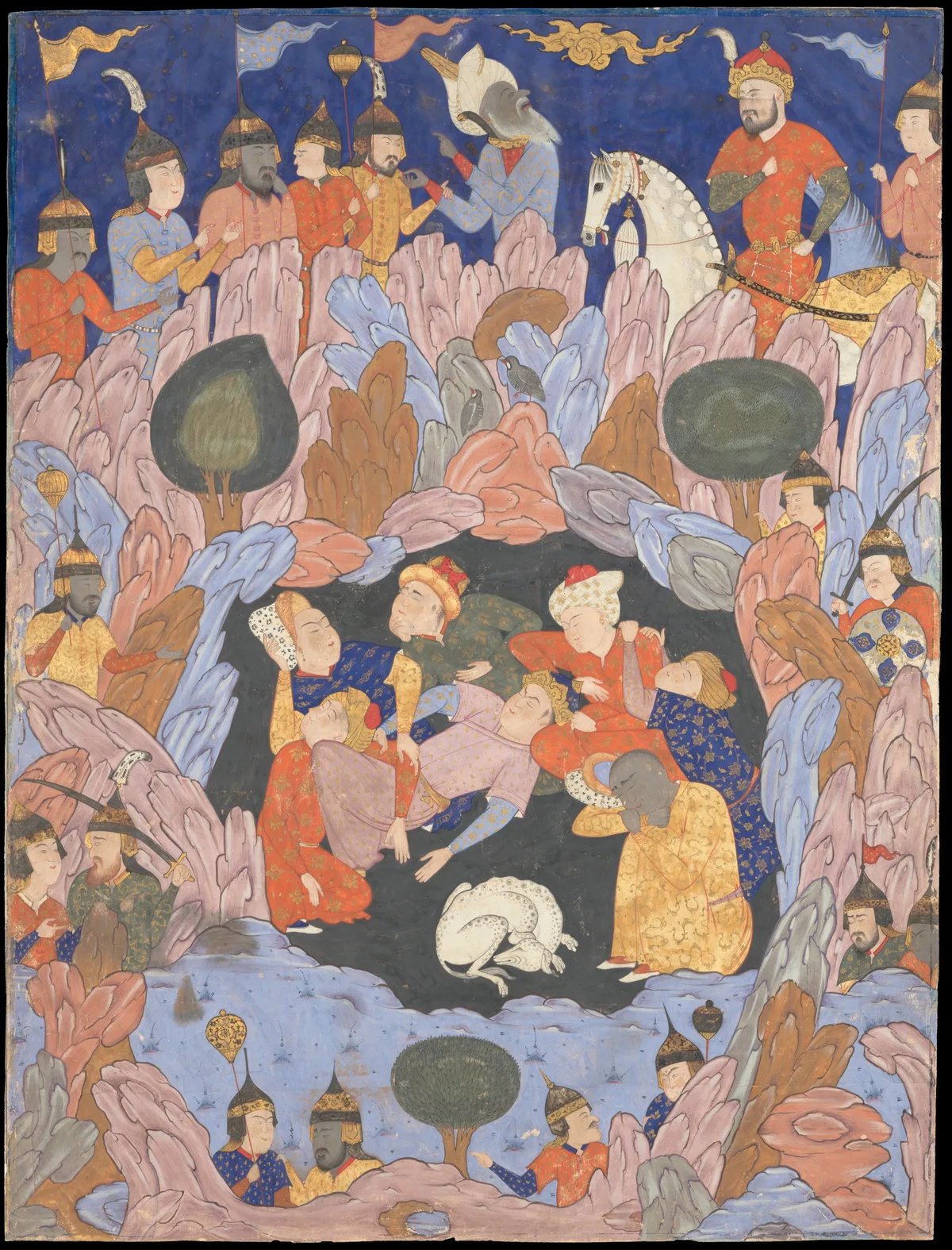
“The Seven Sleepers of Ephesus”, Folio from a Falnama (Book of Omens). 1550s. Ink, opaque watercolor, and gold on paper. Rogers Fund, 1935
Public domain / CC0 — Metropolitan Museum of Art Open Access, verified per object — View at the source collection →
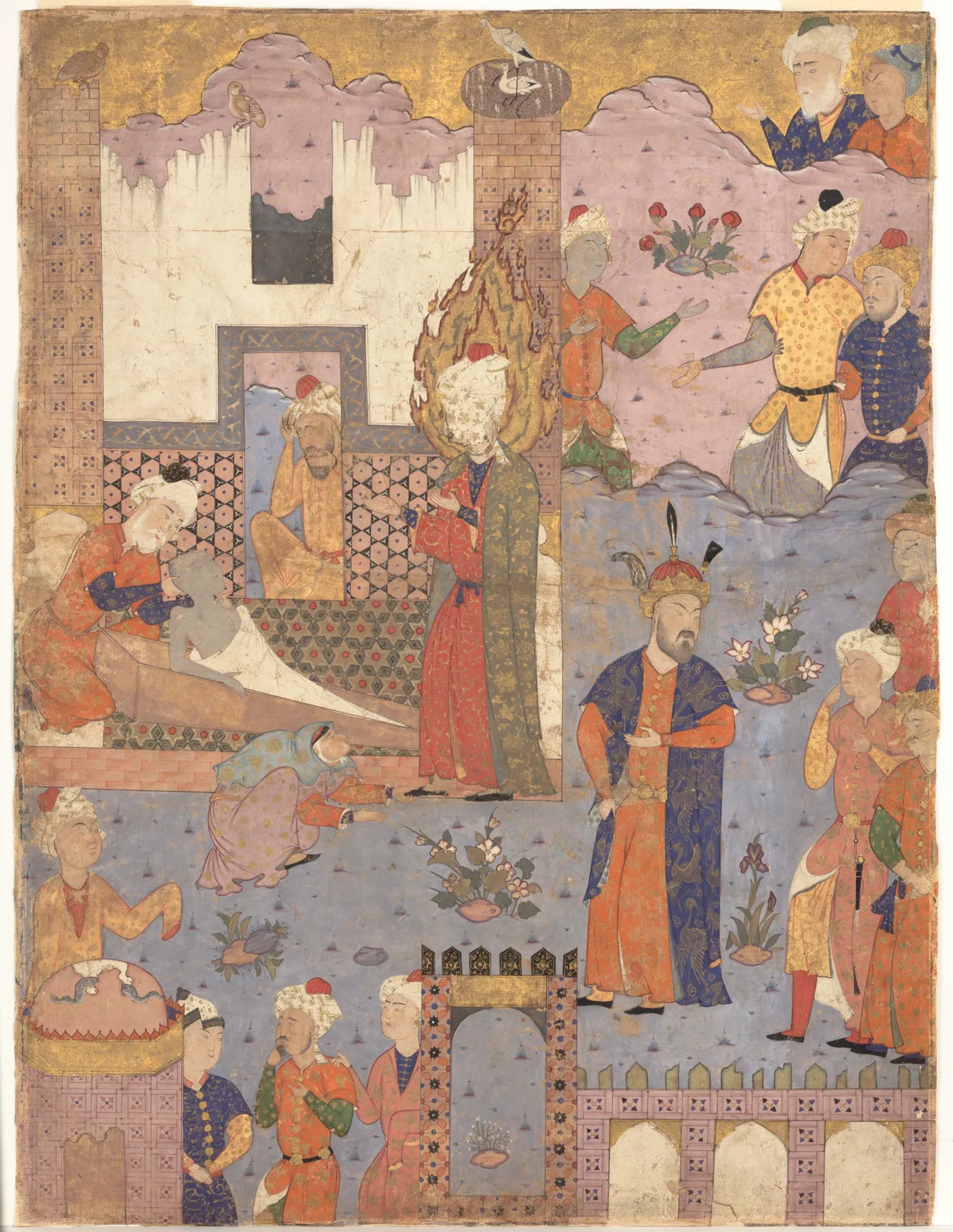
“Muhammad Revives the Sick Boy”, Folio from a Falnama (Book of Omens) of Ja’far al-Sadiq. 1550s. Ink, opaque watercolor, and gold on paper. Purchase, Francis M. Weld Gift, 1950
Public domain / CC0 — Metropolitan Museum of Art Open Access, verified per object — View at the source collection →
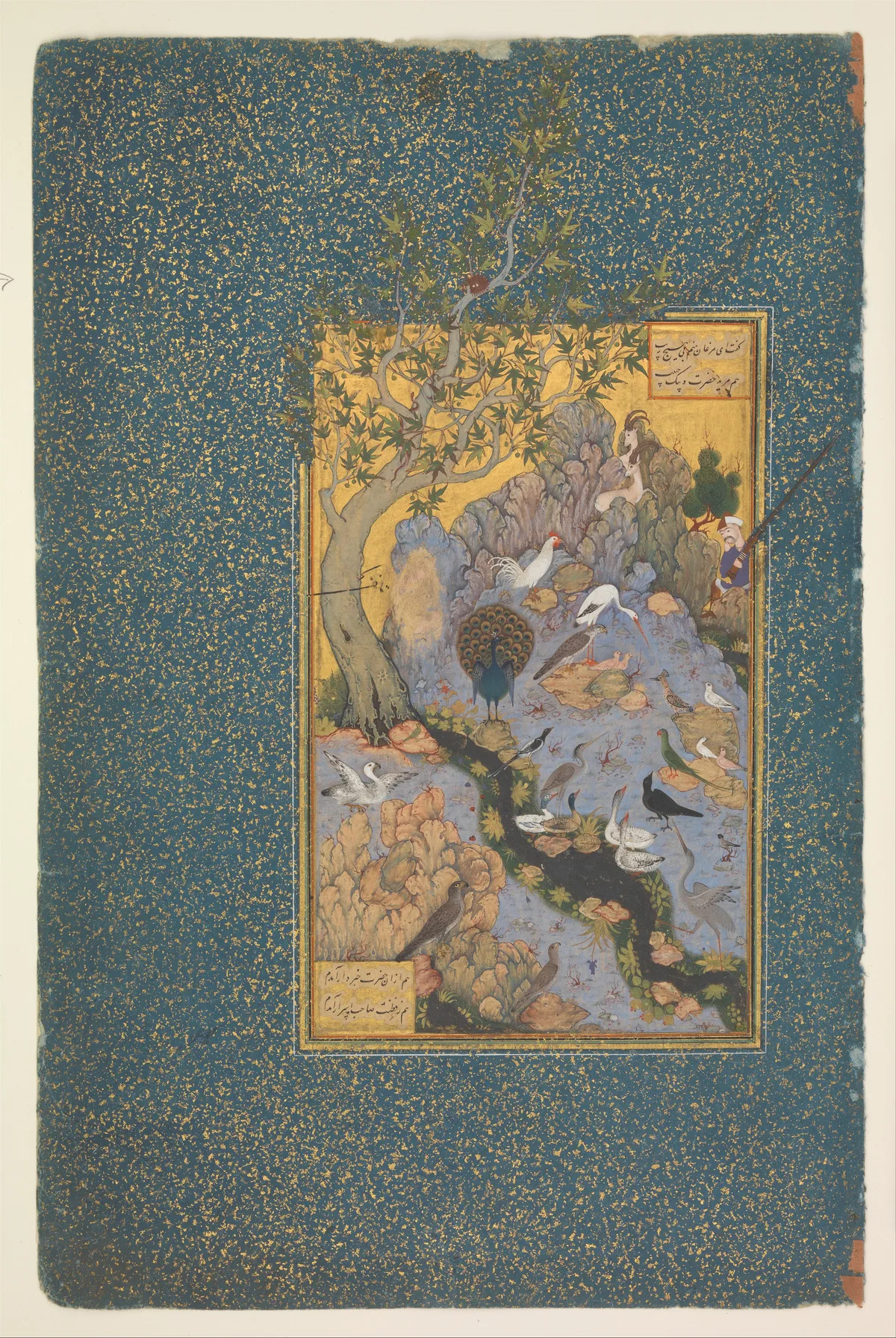
“The Concourse of the Birds”, Folio 11r from a Mantiq al-Tayr (Language of the Birds). ca. 1600. Ink, opaque watercolor, gold, and silver on paper. Fletcher Fund, 1963
Public domain / CC0 — Metropolitan Museum of Art Open Access, verified per object — View at the source collection →
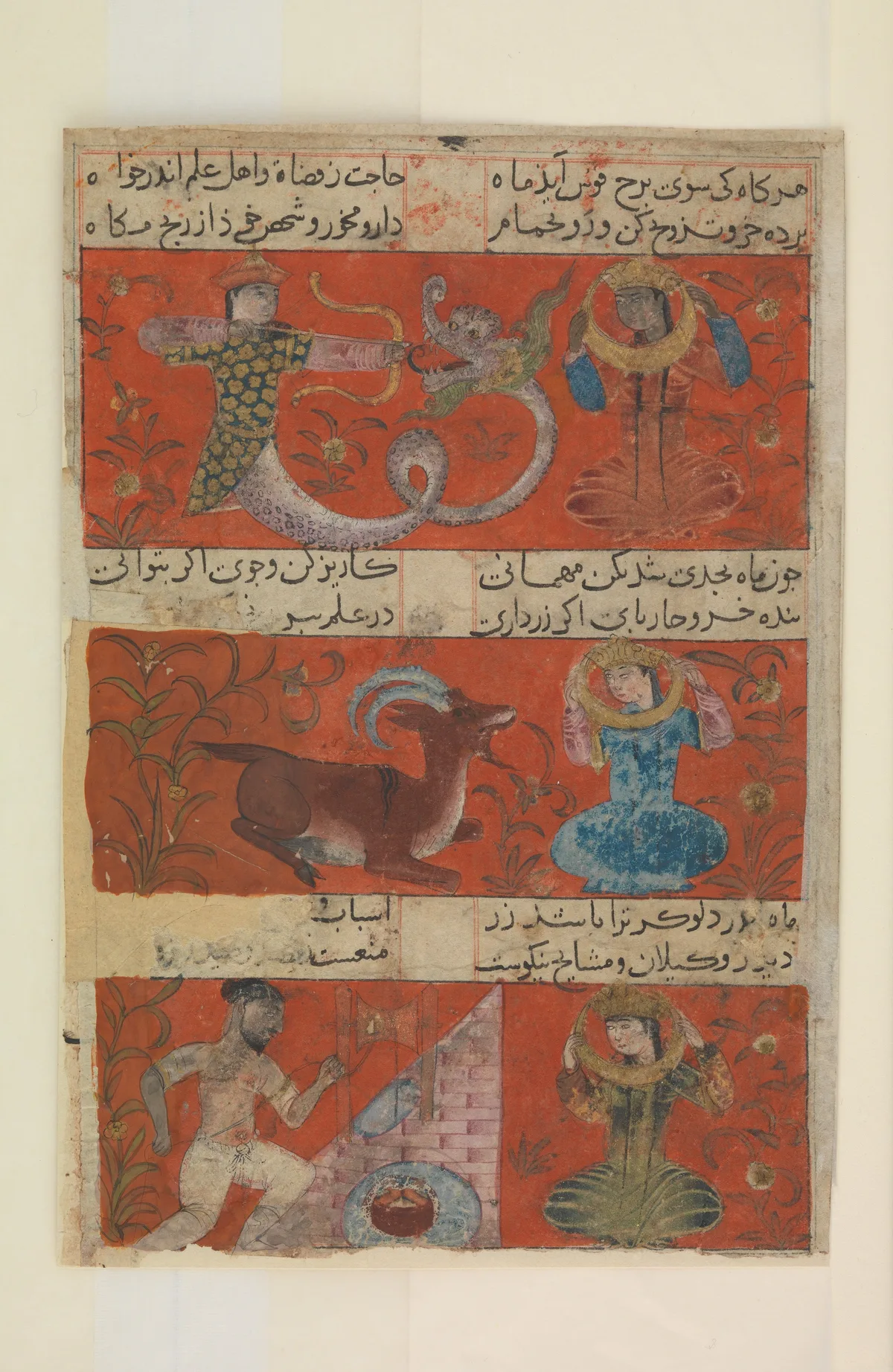
Folio from a Mu’nis al-ahrar fi daqa’iq al-ash’ar (The Free Man’s Companion to the Subtleties of Poems) of Jajarmi. dated 741 AH/1341 CE. Ink, opaque watercolor, and gold on paper. Cora Timken Burnett Collection of Persian Miniatures and Other Persian Art Objects, Bequest of Cora Timken Burnett, 1956
Public domain / CC0 — Metropolitan Museum of Art Open Access, verified per object — View at the source collection →
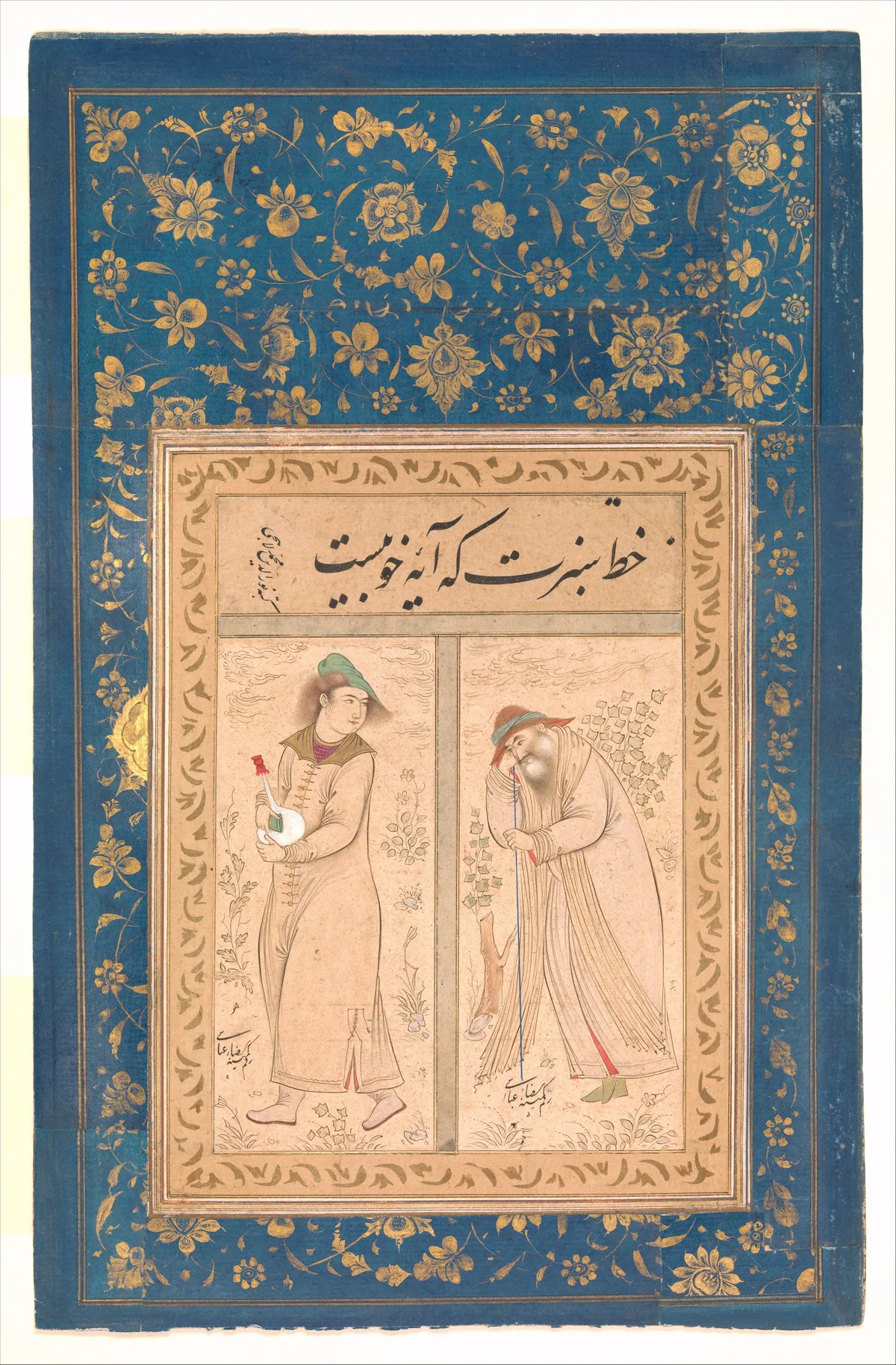
The Old man and the Youth. second quarter 17th century. Ink, transparent and opaque watercolor, and gold on paper. Fletcher Fund, 1925
Public domain / CC0 — Metropolitan Museum of Art Open Access, verified per object — View at the source collection →
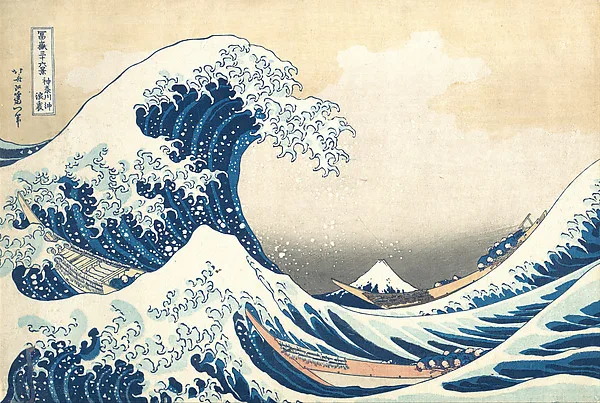
Under the Wave off Kanagawa (Kanagawa oki nami ura), also known as The Great Wave, from the series Thirty-six Views of Mount Fuji. Katsushika Hokusai, ca. 1830–32. H. O. Havemeyer Collection, Bequest of Mrs. H. O. Havemeyer, 1929.
Public domain / CC0 — Metropolitan Museum of Art Open Access — View at the source collection →
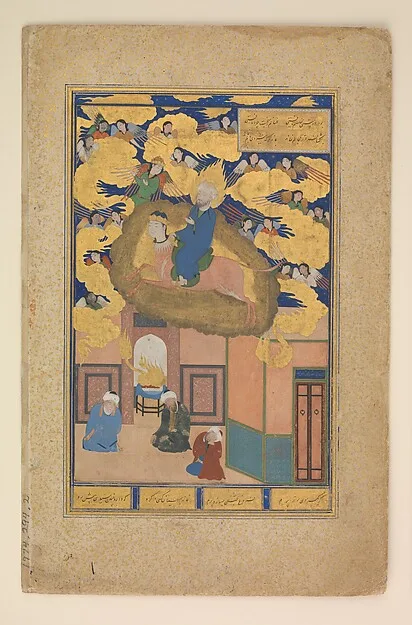
The Mi’raj, or The Night Flight of Muhammad on his Steed Buraq, Folio 3v from a Bustan of Sa’di. Sultan Muhammad Nur, ca. 1525–35. Purchase, Louis V. Bell Fund and The Vincent Astor Foundation Gift, 1974.
Public domain / CC0 — Metropolitan Museum of Art Open Access — View at the source collection →
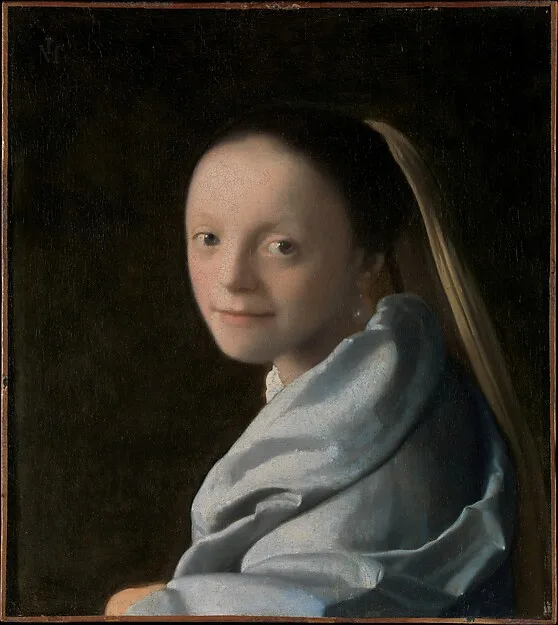
Study of a Young Woman. Johannes Vermeer, ca. 1665–67. Gift of Mr. and Mrs. Charles Wrightsman, in memory of Theodore Rousseau Jr., 1979.
Public domain / CC0 — Metropolitan Museum of Art Open Access — View at the source collection →
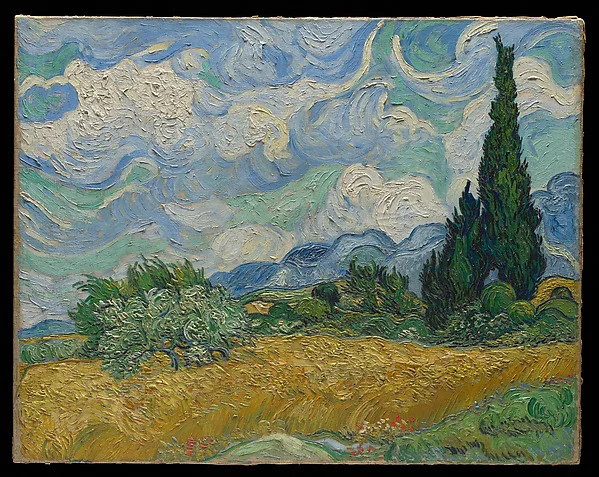
Wheat Field with Cypresses. Vincent van Gogh, 1889. Purchase, The Annenberg Foundation Gift, 1993.
Public domain / CC0 — Metropolitan Museum of Art Open Access — View at the source collection →
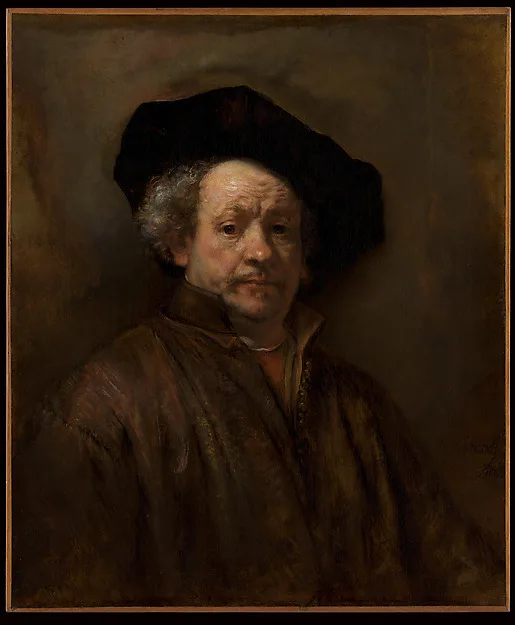
Self-Portrait. Rembrandt (Rembrandt van Rijn), 1660. Bequest of Benjamin Altman, 1913.
Public domain / CC0 — Metropolitan Museum of Art Open Access — View at the source collection →
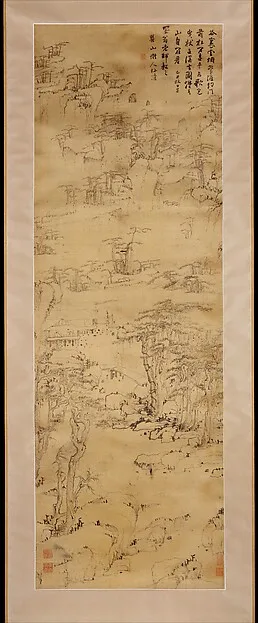
Strolling in a misty valley. Mei Qing, 1649. Purchase, Soong Family Gift, in memory of Dr. T.V. Soong, 1994.
Public domain / CC0 — Metropolitan Museum of Art Open Access — View at the source collection →
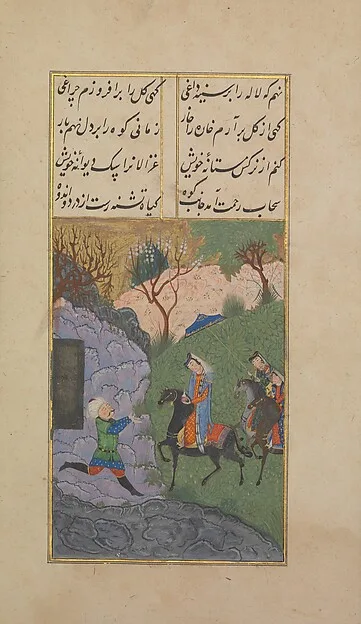
Khusrau and Shirin. Hatifi, dated 904 AH/1498–99 CE. Harris Brisbane Dick Fund, 1969.
Public domain / CC0 — Metropolitan Museum of Art Open Access — View at the source collection →
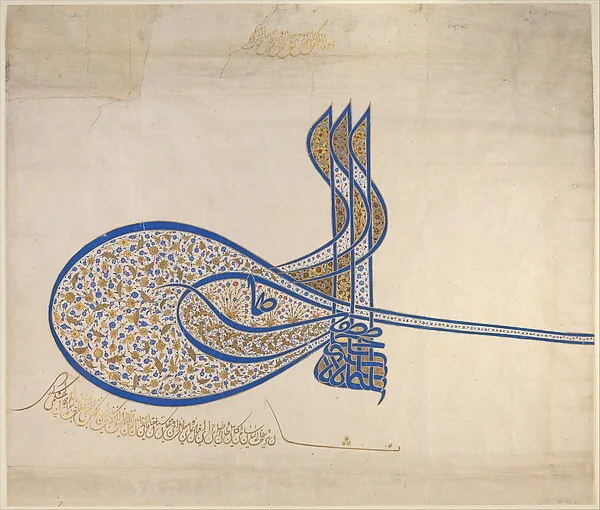
Tughra (Insignia) of Sultan Süleiman the Magnificent (r. 1520–66). Unknown artist, ca. 1555–60. Rogers Fund, 1938.
Public domain / CC0 — Metropolitan Museum of Art Open Access — View at the source collection →
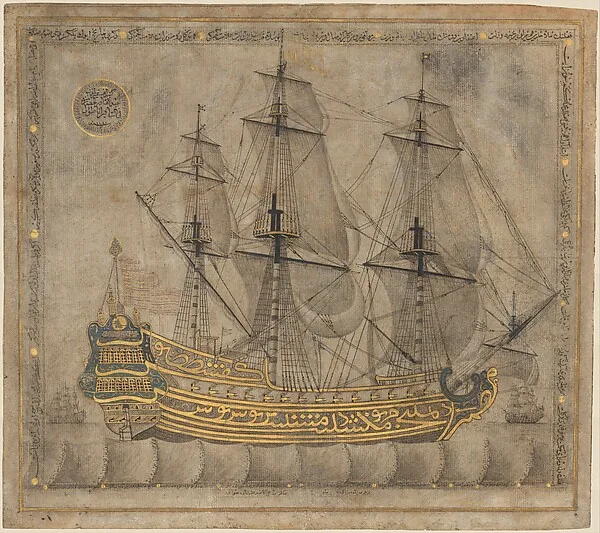
Calligraphic Galleon. 'Abd al-Qadir Hisari, dated 1180 AH/1766–67 CE. Louis E. and Theresa S. Seley Purchase Fund for Islamic Art and Rogers Fund, 2003.
Public domain / CC0 — Metropolitan Museum of Art Open Access — View at the source collection →
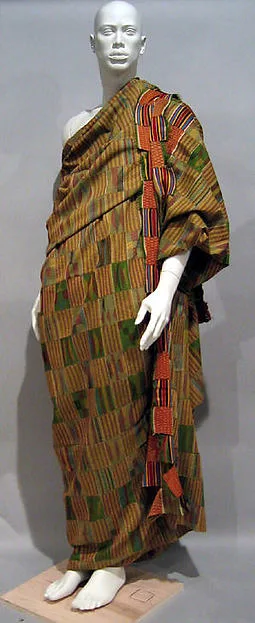
Kente Prestige Cloth. Asante peoples, 19th century. Purchase, Irene Lewisohn Bequest, 1972.
Public domain / CC0 — Metropolitan Museum of Art Open Access — View at the source collection →
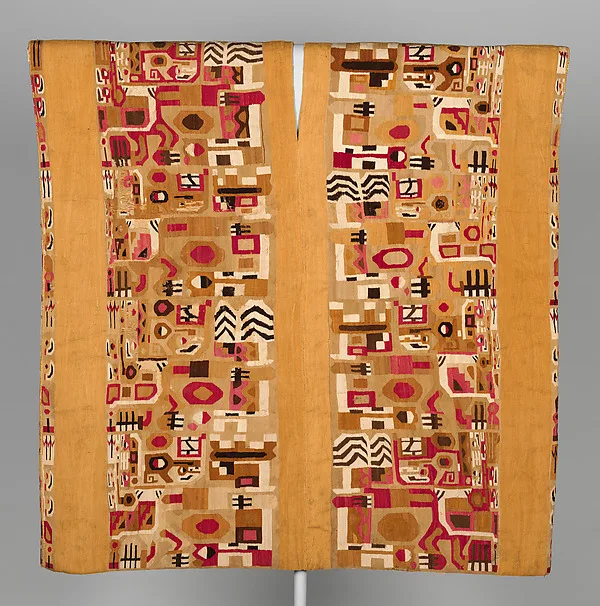
Tunic. Wari artist, 650–1000 CE. Gift of Claudia Quentin, 2021.
Public domain / CC0 — Metropolitan Museum of Art Open Access — View at the source collection →
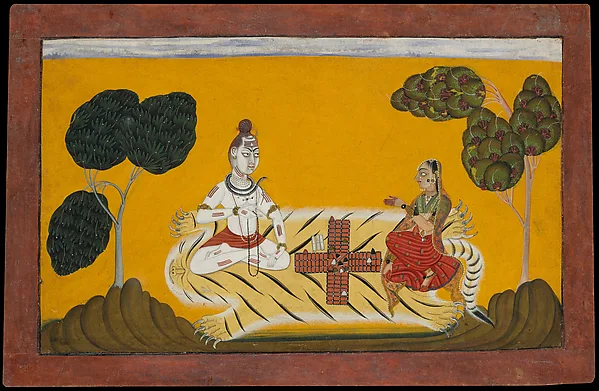
Shiva and Parvati Playing Chaupar: Folio from a Rasamanjari Series. Devidasa of Nurpur, dated 1694–95. Gift of Dr. J. C. Burnett, 1957.
Public domain / CC0 — Metropolitan Museum of Art Open Access — View at the source collection →
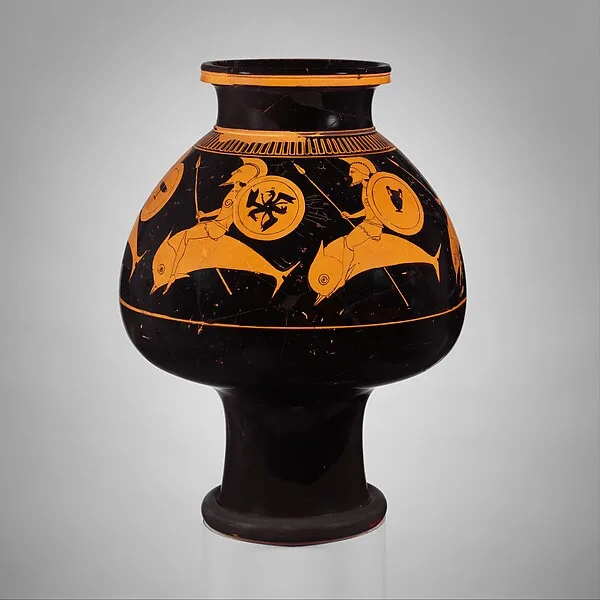
Terracotta psykter (vase for cooling wine). Oltos, ca. 520–510 BCE. Gift of Norbert Schimmel Trust, 1989.
Public domain / CC0 — Metropolitan Museum of Art Open Access — View at the source collection →
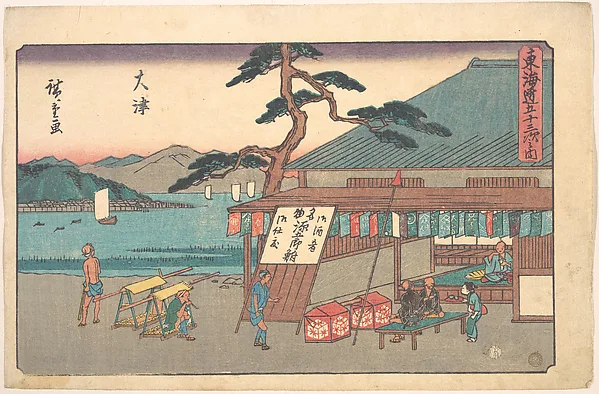
Ōtsu, from the series The Fifty-Three Stations of the Tōkaidō Road (Tōkaidō gojūsan tsugi, Ōtsu). Utagawa Hiroshige, 1841–44. Purchase, Joseph Pulitzer Bequest, 1918.
Public domain / CC0 — Metropolitan Museum of Art Open Access — View at the source collection →
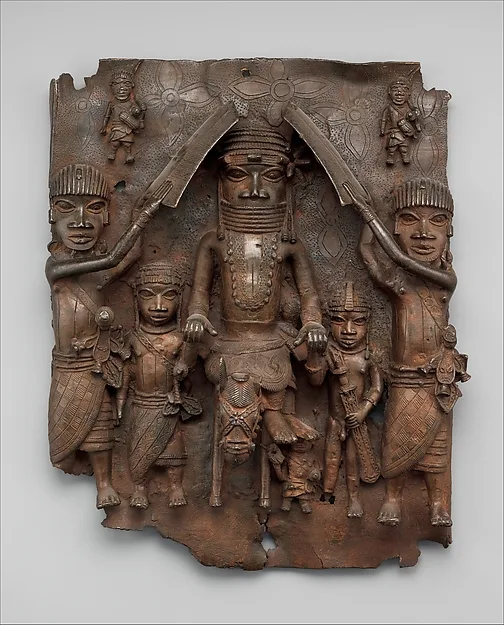
Plaque with equestrian ọ́bà (king) and attendants. Ìgùn Ẹ́rọ̀nwwọ̀n (brass-casting guild) artists, Edo peoples, ca. 1540–70. The Michael C. Rockefeller Memorial Collection, Gift of Nelson A. Rockefeller, 1965.
Public domain / CC0 — Metropolitan Museum of Art Open Access — View at the source collection →
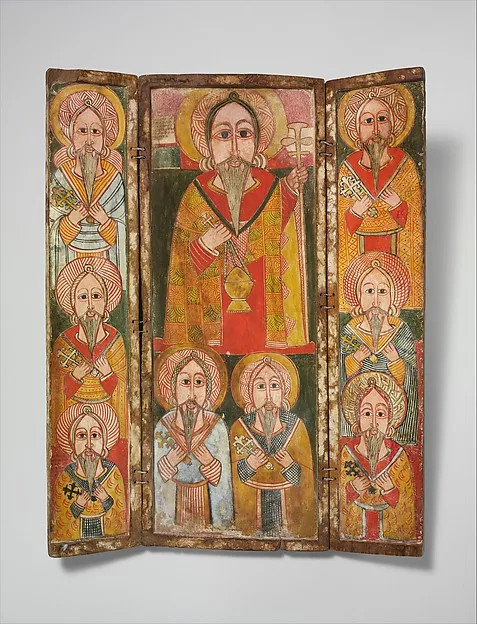
Icon triptych of Ewosṭatewos and eight of his disciples. Northern Highlands artist, late 17th century. Louis V. Bell Fund, 2006.
Public domain / CC0 — Metropolitan Museum of Art Open Access — View at the source collection →
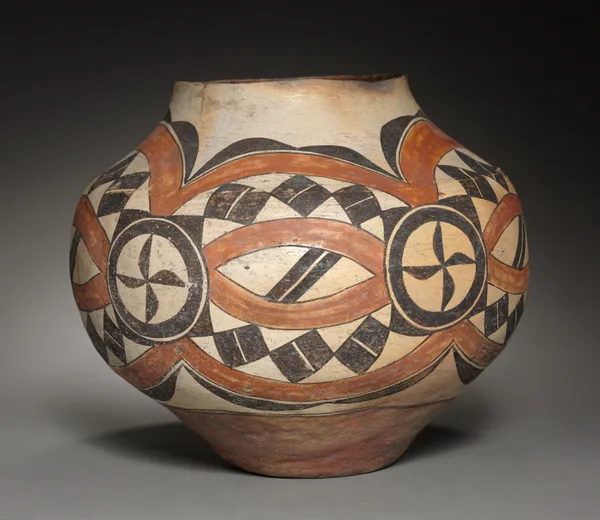
Jar (Olla). Acoma or Laguna Pueblo potter, Southwest, 1875. Cleveland Museum of Art, 1923.1079.
CC0 — Cleveland Museum of Art Open Access — View at the source collection →
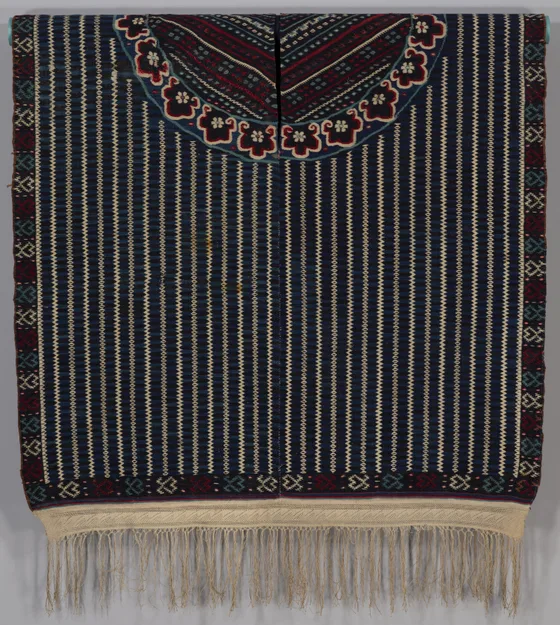
Saltillo Sarape. Saltillo region, Coahuila, Mexico, c. 1840–60. Cleveland Museum of Art, 1921.568.
CC0 — Cleveland Museum of Art Open Access — View at the source collection →
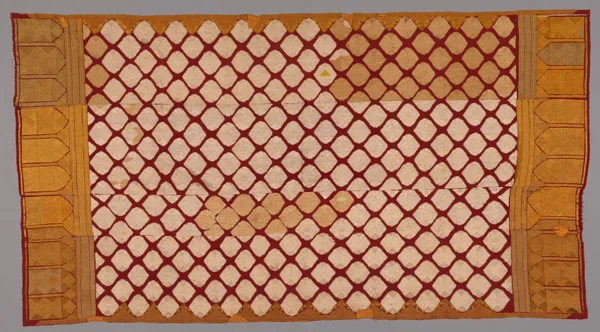
Head Shawl (Phulkari). Punjab, India, 1800s. Cleveland Museum of Art, 1925.475.
CC0 — Cleveland Museum of Art Open Access — View at the source collection →
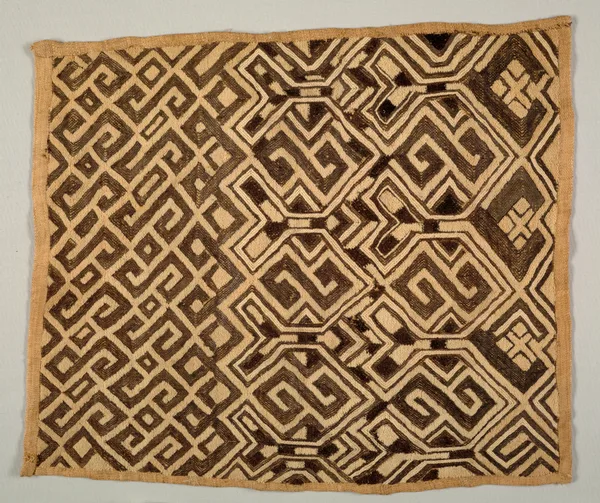
Embroidered Raffia Pile Cloth. Kuba peoples, Democratic Republic of the Congo, 1900s. Cleveland Museum of Art, 1992.102.
CC0 — Cleveland Museum of Art Open Access — View at the source collection →
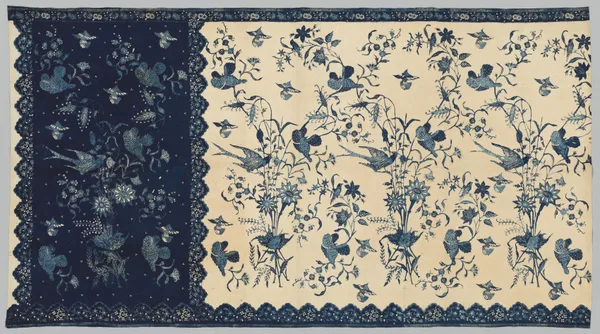
Sarong. North Coast of Java, Indonesia, early 1900s. Cleveland Museum of Art, 1917.27.
CC0 — Cleveland Museum of Art Open Access — View at the source collection →
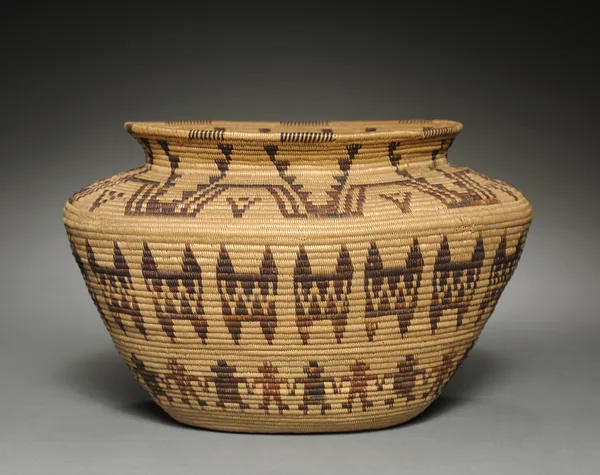
Jar-shaped Basket. Timbisha (Panamint) Shoshone weaver, Death Valley, California, c. 1900–1910. Willow, bulrush and yucca root, coiled. Cleveland Museum of Art, 1917.466.
CC0 — Cleveland Museum of Art Open Access — View at the source collection →
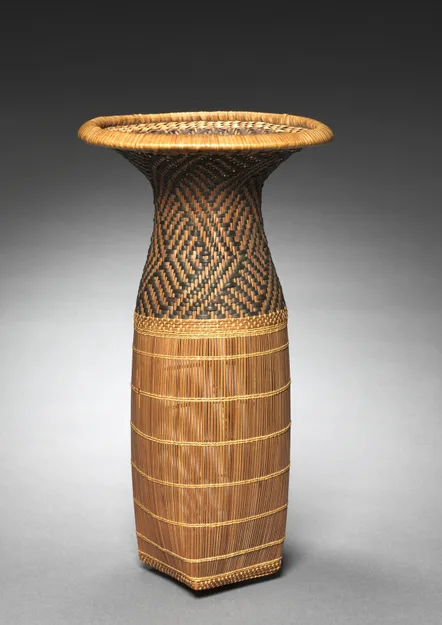
Sifting Basket. Possibly a Chokwe-style maker, Democratic Republic of the Congo or Angola, before 1915. Plant fibres and dye. Cleveland Museum of Art, 1915.464.
CC0 — Cleveland Museum of Art Open Access — View at the source collection →
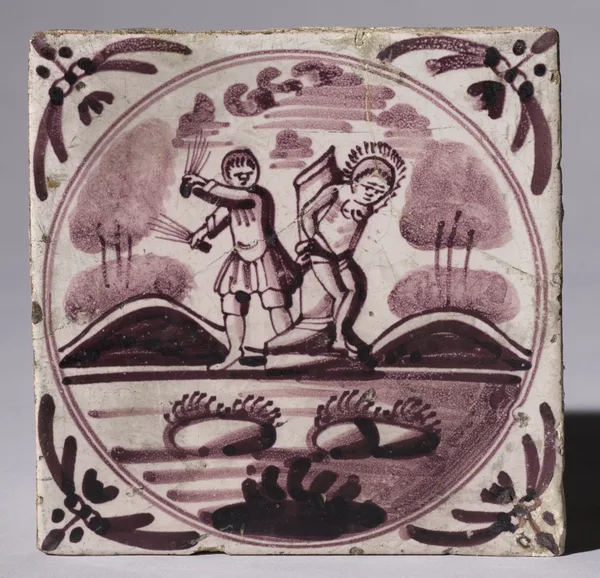
Tile with a New Testament scene. Delft, Holland, Netherlands, c. 1600s–1700s. Glazed ceramic. Cleveland Museum of Art, 1927.223.
CC0 — Cleveland Museum of Art Open Access — View at the source collection →
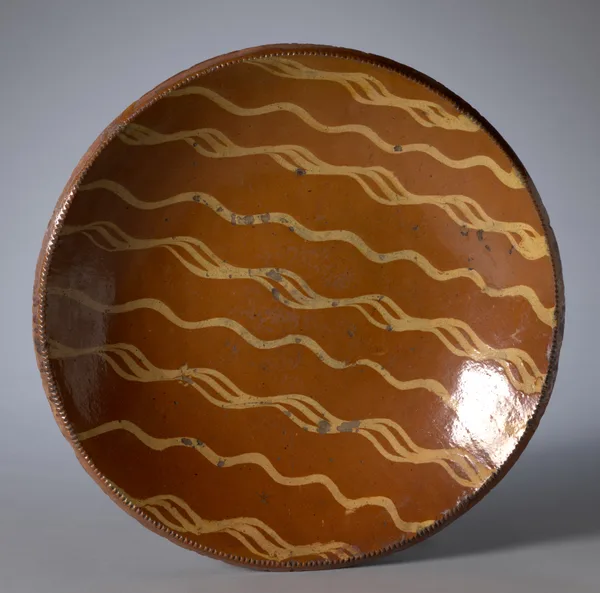
Slipware Dish. Pennsylvania, early 1800s. Red terracotta with yellow and transparent glaze. Cleveland Museum of Art, 1976.162.
CC0 — Cleveland Museum of Art Open Access — View at the source collection →
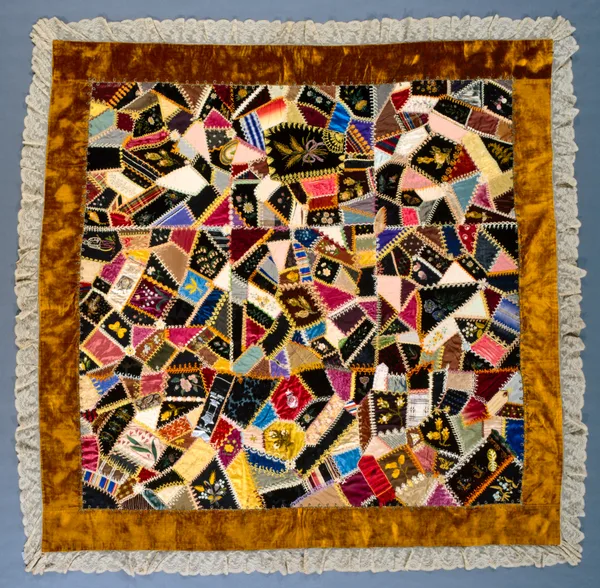
Crazy Quilt. Watertown, New York, c. 1887–1900. Silk, ribbons, lace and velvet, embroidered, with heat transfers. Cleveland Museum of Art, 2000.63.
CC0 — Cleveland Museum of Art Open Access — View at the source collection →
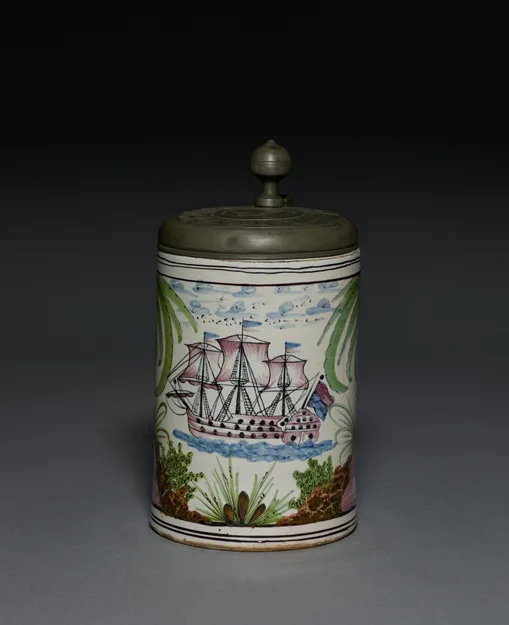
Tankard. Aumund (Vegesack), Germany, c. 1750. Faience with a pewter cover. Cleveland Museum of Art, 1982.340.
CC0 — Cleveland Museum of Art Open Access — View at the source collection →
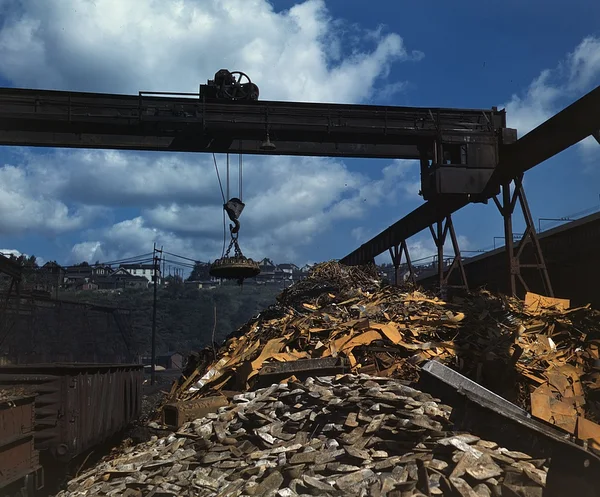
Scrap metal at Allegheny Ludlum Steel Corp., Brackenridge, Pennsylvania, 1941. Library of Congress, Prints & Photographs Division, Farm Security Administration/Office of War Information Color Photographs, LC-DIG-fsac-1a35061.
Public domain — Library of Congress, FSA/OWI Color Photographs — View at the source collection →
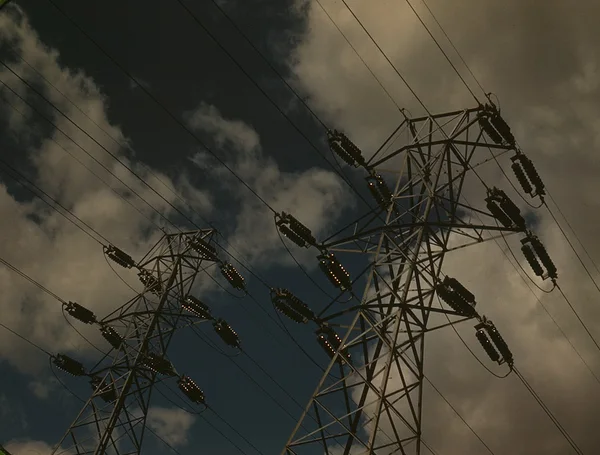
Insulators and transmission wires in the switchyard of the TVA’s Chickamauga Dam, Tennessee, June 1942. Library of Congress, Prints & Photographs Division, Farm Security Administration/Office of War Information Color Photographs, LC-DIG-fsac-1a35273.
Public domain — Library of Congress, FSA/OWI Color Photographs — View at the source collection →
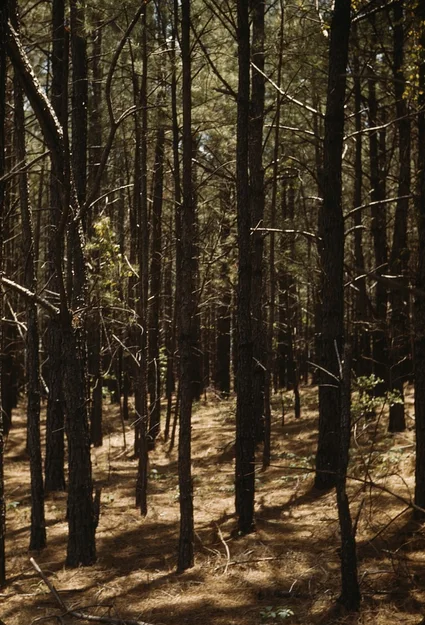
Timber, reforestation project, Maryland (?), between 1941 and 1942. Photographer unidentified. Library of Congress, Prints & Photographs Division, Farm Security Administration/Office of War Information Color Photographs, LC-DIG-fsac-1a34439.
Public domain — Library of Congress, FSA/OWI Color Photographs — View at the source collection →
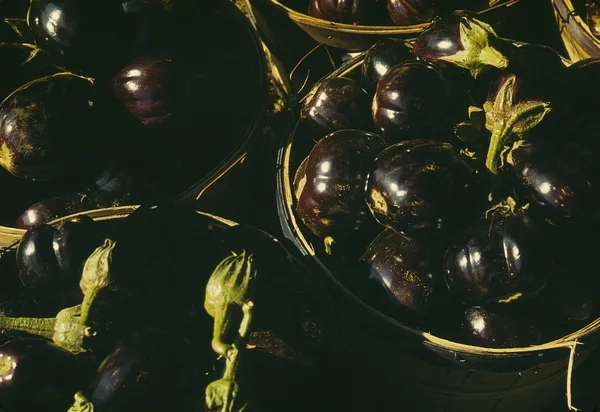
Baskets of eggplants, between 1941 and 1942. Photographer unidentified. Library of Congress, Prints & Photographs Division, Farm Security Administration/Office of War Information Color Photographs, LC-DIG-fsac-1a34448.
Public domain — Library of Congress, FSA/OWI Color Photographs — View at the source collection →
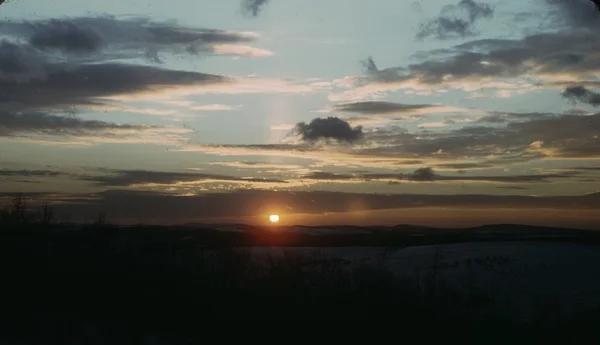
Sunrise or sunset, between 1941 and 1942. Photographer unidentified. Library of Congress, Prints & Photographs Division, Farm Security Administration/Office of War Information Color Photographs, LC-DIG-fsac-1a34438.
Public domain — Library of Congress, FSA/OWI Color Photographs — View at the source collection →
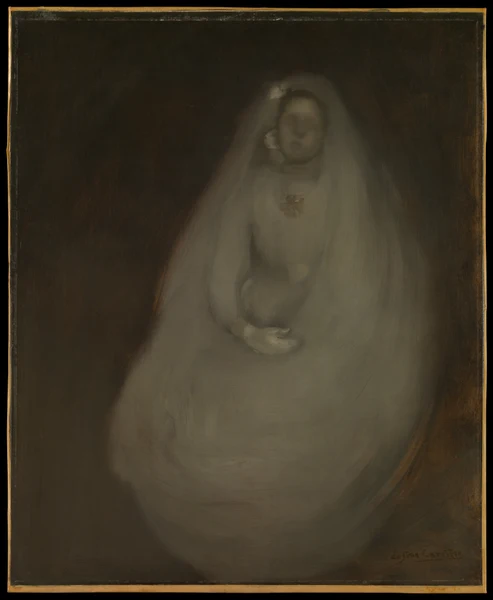
The First Communion. Eugène Carrière (French, 1849–1906), ca. 1896. Oil on canvas. The Metropolitan Museum of Art, Gift of Chester Dale, 1963, 63.138.5.
Public domain (CC0) — Metropolitan Museum of Art Open Access — View at the source collection →
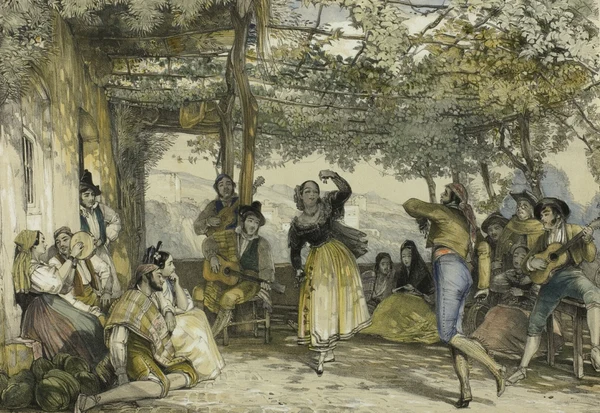
Spanish Peasants Dancing the Bolero. John Frederick Lewis (English, 1805–1876), 1836. Lithograph in colours with hand-colouring on ivory wove paper. Art Institute of Chicago, 1991.620.
Public domain — Art Institute of Chicago Open Access — View at the source collection →
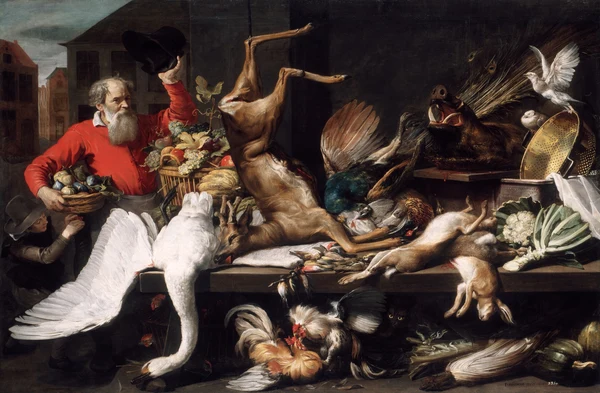
Still Life with Dead Game, Fruits, and Vegetables in a Market. Frans Snyders (Flemish, 1579–1657), 1614. Oil on canvas. Art Institute of Chicago, 1981.182.
Public domain — Art Institute of Chicago Open Access — View at the source collection →
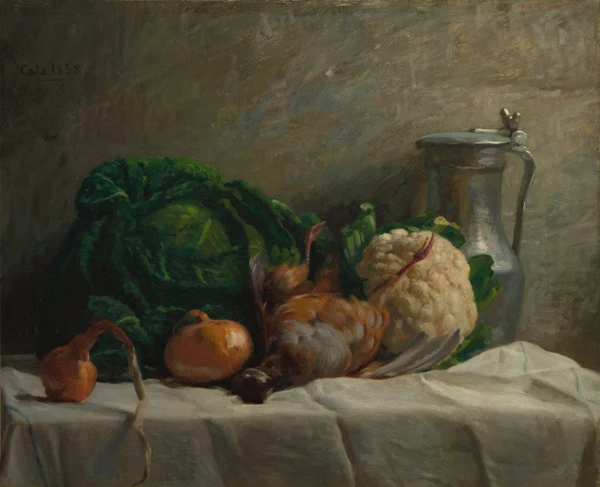
Still Life with Vegetables, Partridge, and a Jug. Adolphe-Félix Cals (French, 1810–1880), 1858. Oil on canvas. Cleveland Museum of Art, 1980.242.
CC0 — Cleveland Museum of Art Open Access — View at the source collection →
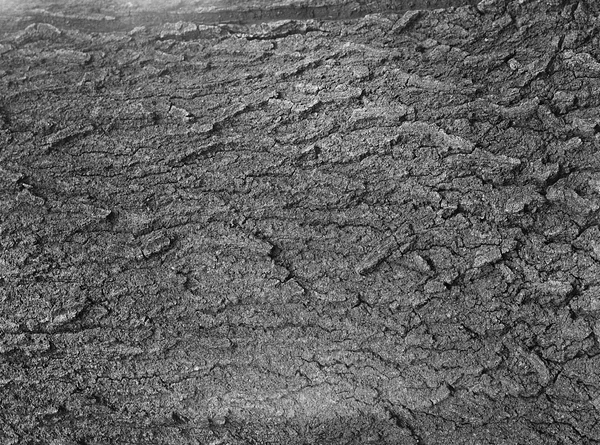
Texture background for motion picture and filmstrip. Bark of oak tree, 1942. Photograph by John Ferrell. Library of Congress, Prints & Photographs Division, Farm Security Administration/Office of War Information Black-and-White Negatives, LC-USF34-011603-D.
Public domain — Library of Congress, FSA/OWI Black-and-White Negatives — View at the source collection →
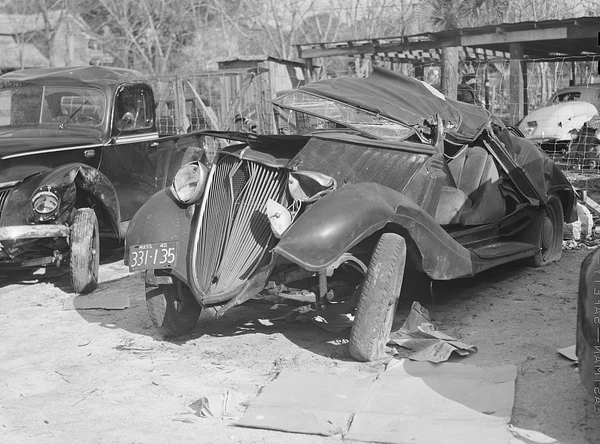
Wrecked car of construction worker. Starke, Florida, 1940. Photograph by Marion Post Wolcott. Library of Congress, Prints & Photographs Division, Farm Security Administration/Office of War Information Black-and-White Negatives, LC-USF34-056722-D.
Public domain — Library of Congress, FSA/OWI Black-and-White Negatives — View at the source collection →
The studies behind the taste readings
Two readings are scored from the taste lists and both lean on published work rather than on this project’s own hunch. Reflective Taste is the Reflective & Complex factor of Rentfrow & Gosling (2003), scored against its correlate with Openness. Bandwidth is the omnivore count of Peterson & Kern (1996) divided by the list it was counted over. Its expectation about Openness rests on Chan (2019) and Kraaykamp & van Eijck (2005), who both found the broad higher on that trait; its expectation about social position, and the one pairing it predicts will come back empty — economic left–right — rest on Chan alone; and its minimum number of elements is set by Warde et al. (2007), who showed that who comes out an omnivore depends on which genres were listed. The standing portrait under the maps follows Bryson (1996), who found that broad taste has a pattern to its exclusions; the standings themselves — canon, popular, dismissed — were placed by this project, bank by bank, and are credited above with the works they sit on. Under the maps themselves, Media, Music, Film & TV, Literature, Sport, Games, and Podcasts & creators each name the study their map leans on, or declines to lean on, and those are listed here with the rest.
- 01
- 02
- 03
- 04
- 05
- 06
- 07
- 08
- 09
- 10
- 11
- 12
- 13
Quotes and figures
Every quote in Quote Resonance and Historical Attribution is attributed to a real person and drawn from documented speeches, writing, or interviews — none are invented or AI-generated. Sourcing confidence is tracked per item (verified against multiple independent sources, translation-only, disputed, or unconfirmed pending further research) rather than presented as uniformly certain; a small number of originally-sourced lines that didn’t survive an independent fact-check pass were removed rather than included. The full sourcing notes live in this project’s own research documentation, not published on the site itself.
Typefaces
Space Grotesk (display), IBM Plex Sans (body), and IBM Plex Mono (data/labels) — all open-source, via Google Fonts.